
Practice Plumbing Aptitude Test
Are you applying for a plumbing apprenticeship? Becoming a plumbing apprentice lets you get hands-on experience, and take classes, while still earning a salary in the plumbing industry. For this reason, gaining acceptance to a union plumbers apprenticeship program is extremely competitive. The first hurdle in your journey toward becoming a successful plumber is to take the Plumbing Aptitude Test. We are here to walk you through everything you need to know about the Plumber Union Test including providing you with FREE Plumbing Apprentice Test questions, answers, and explanations.
What Is the Plumbers Aptitude Test?
The Plumber Aptitude Test is a standardized exam designed to assess the skills and knowledge necessary for success in a plumbing apprenticeship program. It typically includes a variety of sections that evaluate different abilities. Here's a breakdown of each section:
Reading
This section includes 42 questions and has a time limit of 25 minutes. It tests your ability to read and understand written information, which is crucial for following instructions and reading technical manuals in plumbing.
Numerical Computation
This part consists of 28 questions with a time limit of 24 minutes. It evaluates your basic arithmetic skills, such as addition, subtraction, multiplication, and division. These skills are essential for tasks like measuring, cutting, and calculating materials. You are NOT allowed to use a calculator on this section.
Numerical Reasoning
With 10 questions and a 10-minute time limit, this section focuses on your ability to solve problems using numbers. It includes understanding relationships between numbers and applying logical thinking to numeric data. No calculators allowed during this portion.
Folding
This section contains 12 questions and has a time limit of 15 minutes. It tests your spatial reasoning skills, specifically your ability to visualize and manipulate objects in space, which is important for tasks like installing pipes in tight or complex spaces.
Problem Solving
This section includes 35 questions with a 35-minute time limit. The questions measure your ability to think critically and solve practical problems. This skill is essential for diagnosing and fixing plumbing issues on the job.
Mechanical Comprehension
This part includes 13 questions with a 13-minute time limit. It assesses your understanding of basic mechanical principles, such as force, leverage, and the operation of simple machines, which are directly applicable to plumbing work.
Take a Practice Plumbers Union Test
Plumbing Aptitude Test Practice Questions and Answers
Reading Sample Question
The advancement of green technology in the plumbing industry, such as low-flow fixtures and solar water heaters, has significantly contributed to improvements in water conservation and energy efficiency. However, the extent of this adoption varies markedly across regions. This variation is often due to differences in local regulations and the availability of incentives, which can either facilitate or hinder the integration of these technologies. The challenge remains in achieving uniform implementation of green practices across diverse regulatory environments.
Which of the following statements most accurately reflects the relationship between green technology adoption and regional factors?
- The adoption of green technology in plumbing is consistently high across all regions due to uniform regulatory standards.
- Differences in local regulations and incentives are key factors affecting the extent to which green technology is adopted in plumbing.
- The integration of low-flow fixtures and solar water heaters is driven solely by technological advancements, without regard to local regulations.
- Environmental concerns have no impact on the regional variability of green technology adoption in plumbing.
Answer
B. Differences in local regulations and incentives are key factors affecting the extent to which green technology is adopted in plumbing.
The passage explains that the variability in green technology adoption across regions is influenced by differing local regulations and incentives. Therefore, statement B accurately captures this relationship by highlighting how these regional factors affect adoption levels.
Learn more with this Plumbing Aptitude Test Practice PDF
Numerical Computation Sample Question
Convert 7/16 into a decimal.
- 0.375
- 0.4375
- 0.45
- 0.5
Answer
B. 0.4375
Explanation: To convert 7/16 into a decimal, divide the numerator (7) by the denominator (16). Performing the division:
7/16 = 0.4375
Get more Sample Plumbing Union Math Test
Numerical Reasoning Sample Question
Identify the next number in the sequence: 2, 6, 12, 20, 30, ?
- 42
- 44
- 46
- 48
Answer
A. 42
The sequence increases according to a pattern based on the differences between successive numbers:
- The difference between 6 and 2 is 4.
- The difference between 12 and 6 is 6.
- The difference between 20 and 12 is 8.
- The difference between 30 and 20 is 10.
The differences between successive terms are increasing by 2 each time (4, 6, 8, 10). To find the next term:
- The next difference should be 10+2=12
- Adding this difference to the last term: 30+12=42.
Thus, the next number in the sequence is 42.
Get more Sample Plumbing Union Math Test Questions
Folding Sample Question

Answer
The answer is C.
To solve this problem, imagine rotating cube (C) 180 degrees clockwise so that the purple face is on top of the red face. You will see that the green face is to the left of the red face, just like in the unfolded version of the cube. This makes C the correct answer.
Answer (A) is wrong because the red and dark blue faces are on opposite sides and cannot touch.
Answer (B) is wrong because the purple and light blue faces are also on opposite sides and cannot touch.
Answer (D) is incorrect because when the red face is above the light blue face in the unfolded cube, the green face should be to the left of the red face, not to the right as shown in cube (D).
Get more Sample Folding Plumber Test Questions
Problem Solving Sample Question
A cyclist rode at a speed of 12 mph for 2 hours and then increased his speed to 18 mph for 1.5 hours. What was the total distance covered in miles?
- 51 miles
- 30 miles
- 27 miles
- 24 miles
Answer
A. 51 miles
To find the total distance covered, calculate the distance for each segment of the trip and then add them together.
- First Segment:
- Speed = 12 mph
- Time = 2 hours
- Distance = Speed × Time = 12 mph × 2 hours = 24 miles
- Second Segment:
- Speed = 18 mph
- Time = 1.5 hours
- Distance = Speed × Time = 18 mph × 1.5 hours = 27 miles
- Total Distance:
- Total Distance = Distance from First Segment + Distance from Second Segment
- Total Distance = 24 miles + 27 miles = 51 miles
Get more Sample Problem Solving Plumbers Math Test Questions
Mechanical Comprehension Sample Question

Answer
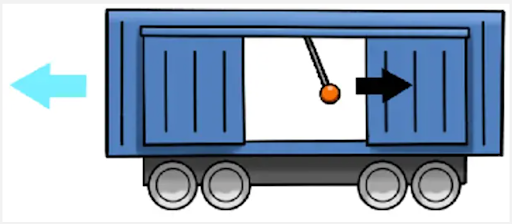
Anser is A.
When a pendulum swings backward, it means the car is accelerating in the opposite direction. This is similar to how you feel pulled back when the car speeds up or pushed forward when the car brakes.
The principle is that when you're inside a car that's accelerating or braking, you feel a force that seems to pull you in the opposite direction of the car's acceleration.
Get more Sample Plumbing Mechanical Aptitude Test Questions
Plumbers Union Aptitude Test FAQs
What Happens if You Fail the Plumber Aptitude Test?
If you fail the Plumber Aptitude Test, you typically have the option to retake it after a waiting period. Some programs may allow multiple attempts, but every plumber's union has their own rules. Failing the test will delay your entrance to a program. Programs are highly competitive so it is important to try and pass the first time around.
Plumbing Apprenticeship Practice Test
What Is a Good Score on the Plumbing Union Aptitude Test?
A good score on the Plumbing Aptitude Test generally depends on the standards set by the specific apprenticeship program or organization. Most programs consider a score of 70% or higher to be competitive. Many programs are looking for at least a score of 80%. Aim for the highest score possible to increase your chances of acceptance.
Where Do You Take the Plumber's Apprentice Test?
You take the Plumbers Apprentice Test at designated testing centers or locations specified by the plumber union or apprenticeship program. These may include local union halls, educational institutions, or authorized testing facilities. Make sure you follow the testing instructions given to you by your specific program. If you are applying to multiple union apprenticeships follow the guidelines specified by each local union.
How Long Is the Plumbing Test?
The Plumbers Test typically has 140 questions to be completed within about 2 hours. The exact duration can vary depending on the specific test and the number of sections included.
What Is the Difference Between the Different Plumbing Apprenticeship Tests?
There are two main entrance tests for plumber apprenticeships, depending on your location. In the US, the most common is the Plumbers Union GAN Aptitude Test, administered by GAN Human Resources, which supports union apprenticeship programs nationwide. In the UK, the BPEC Aptitude Test, managed by the British Plumbing Employers Council (BPEC), is required for entry into BPEC certification courses.
What Is the Plumbing Aptitude Test Used For?
The Plumbing Assessment Test is used by plumber unions to evaluate candidates for apprenticeship programs. If you do poorly on the exam you will not gain acceptance to the plumber union apprenticeship program and you won't be able to begin your lucrative career as a plumber.
Plumbing Apprenticeship Aptitude Test
What Is the Plumbers Union?
The Plumbers Union is a labor organization that represents plumbers and other workers in the plumbing industry. Its primary purpose is to protect the rights of its members, negotiate fair wages, secure benefits, and ensure safe working conditions. The union also plays a significant role in providing training and apprenticeship programs to help members develop their skills and advance in their careers. In the United States, the most well-known plumbers' union is the United Association of Journeymen and Apprentices of the Plumbing and Pipefitting Industry of the United States and Canada (UA). The UA represents workers across various trades, including plumbing, pipefitting, and HVACR (heating, ventilation, air conditioning, and refrigeration). Local unions within the UA operate in specific regions, offering support and resources tailored to the needs of plumbers in those areas.
Practice Plumbing Union Test
What Does a Plumbing Apprentice Do?
A plumbing apprentice assists experienced plumbers with tasks such as installing and repairing pipes, fixtures, and systems. They learn essential skills, follow safety protocols, and gain hands-on experience to prepare for becoming a licensed plumber.
What Is a Plumbing Apprentice's Salary?
A plumbing apprentice's salary typically ranges from $30,000 to $50,000 per year, depending on location, experience, and the specific apprenticeship program. Your salary usually increases as you gain experience and progress through the training.
What Is a Licensed Plumber Salary?
The estimated total annual pay for a Licensed Plumber in the United States is $144,475. This includes an average base salary of $105,176 and an estimated additional pay, including bonuses, commissions, tips, and profit sharing, of $39,298 per year.
Practice Plumbers and Pipefitters Aptitude Test
How Can I Prepare for the Plumbing Aptitude Test?
To prepare for the Plumbing Aptitude Test, start by taking a Plumbers Union Practice Test to familiarize yourself with the test format and question types. Review this Plumbing Aptitude Test Study Guide to help you understand what you are getting yourself into. The Plumbers Math test questions can be tricky as no calculator is allowed. This means that you need to do all the calculations in your head. Additionally, the test includes 140 questions covering a wide variety of topics. This can be challenging and fatiguing if you don't know what to expect.
Plumbing Apprenticeship Overview
A plumbing apprenticeship is a structured training program that combines on-the-job experience with classroom instruction. Here's an overview of how to become a plumber apprentice and what is covered during the plumbing apprenticeship:
- Duration: Apprenticeships typically last 4 to 5 years.
- Training: Apprentices work under the guidance of experienced plumbers, learning to install, repair, and maintain plumbing systems. They also attend classes to study plumbing codes, safety practices, and technical skills.
- Requirements: Applicants often need a high school diploma or GED, and need to pass Plumbers Apprenticeship Test. Physical stamina and problem-solving skills are also important.
- Certification: Upon completion, apprentices become licensed journeyman plumbers, qualifying them to work independently and advance their careers.